

Vonage vs. RingCentral vs. Zoom Phone: Which is Best for Remote Sales Teams in 2026?
Daniel Zvi
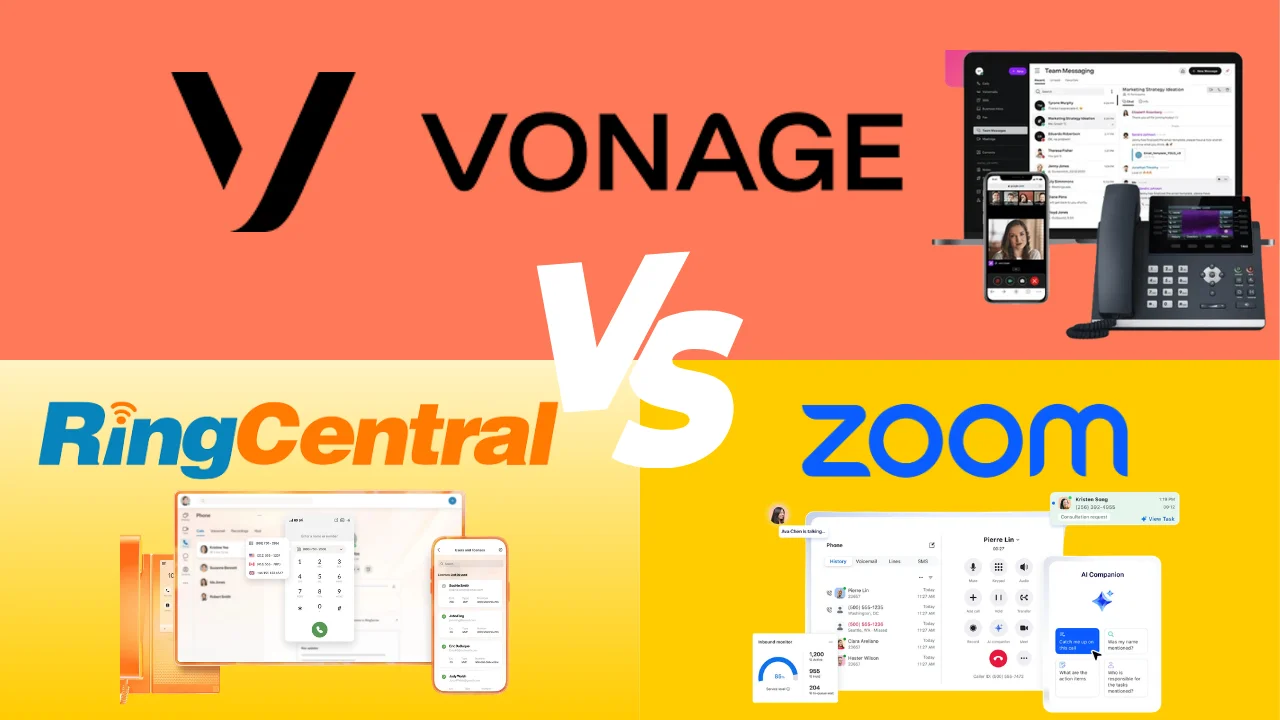
If you are managing a growing remote sales team in 2026, RingCentral is the undisputed winner because it offers the most powerful out-of-the-box AI coaching and native CRM integrations without hiding core sales features behind paywalls.
Zoom Phone is the best choice if your team prioritizes video meetings and needs an affordable, unified app environment. Vonage falls behind both; while its base price looks cheap, it requires expensive add-ons for basic necessities like call queues and call recording, making it suited only for bare-bones local businesses.
In this deep-dive comparison, we are analyzing these three giants through the specific lens of Remote Sales & Support Teams. We will break down the battle of Native AI Power vs. Hidden Feature Paywalls, exposing the true 2026 costs of scaling your operations.
 Our top picks for October 2026
 9.3
9.3


 Voice, video & text collab.


General Overview & Snapshot
To understand which phone system fits your remote team, you must understand how their platforms are fundamentally built.
Vonage is a legacy VoIP provider that relies heavily on a la carte pricing. You pay a low base rate, but must pay extra for features that modern teams consider standard. RingCentral is a premium Unified Communications (UCaaS) powerhouse designed explicitly for heavy call volumes, boasting industry-leading integrations. Zoom Phone is a cloud PBX built natively into the Zoom video ecosystem, designed to keep your team communicating in a single, familiar window.
Comparison at a Glance
| Feature | Vonage | RingCentral | Zoom Phone |
| Best For | Basic local dialing & Developers | High-volume sales & CRM syncing | Video-first collaborative teams |
| Starting Price | $13.99/user/month (Promo) | $20.00/user/month | $10.50/user/month (Metered) |
| Platform Type | A la carte VoIP & APIs | AI-First UCaaS | Unified Video & PBX Hub |
| Core Feature 1 | Unlimited domestic SMS | RingSense Agentic AI | AI Companion Summaries |
| Core Feature 2 | Developer API library | 350+ Native Integrations | Seamless Video/Phone switching |
| Support | Tiered (Add-on priority) | 24/7 Premium Support | 24/7 on paid plans |
Pricing Breakdown: The True Cost of Scaling
The "sticker price" you see in VoIP ads is incredibly deceptive. Here is the accurate 2026 pricing breakdown for a growing team.
Which offers better value?
Winner for High-Volume Teams: RingCentral
Winner for Budget-Conscious Video Teams: Zoom Phone
- Vonage Pricing: Vonage utilizes a deceptive pricing model. The base "Mobile" plan starts at $13.99/user/month (with an annual contract). However, to get call recording, you must upgrade to the Advanced plan ($27.99/month) AND pay an extra $49.99/month for the recording storage block. Need a basic call queue for your support desk? That's an extra $14.99/month per queue (plus wait-time per-minute fees) or $250/month for unlimited queueing. Verdict: Poor value due to aggressive hidden fees.
- RingCentral Pricing: RingCentral embraces an all-inclusive model. The Core plan starts at $20.00/user/month, but sales teams will want the Advanced tier at $25.00 to $35.00/user/month. This includes automatic call recording, multi-level IVR, and over 300 integrations (including Salesforce) directly in the base price. Verdict: Excellent value for revenue-generating teams that need predictable billing.
- Zoom Phone Pricing: Zoom offers incredibly flexible routing. Their US & Canada Metered plan is just $10.50/user/month if your team makes very few outbound calls. For unlimited regional calling, it is $15.00 to $16.00/user/month. To unlock call queues and advanced analytics, you will need the Zoom Phone Power Pack add-on for $25.00/user/month. Verdict: The best raw value for startups, especially if you already pay for a Zoom Workplace bundle.
Core Features Comparison
Vonage Features
Vonage's platform is stable, but requires higher tiers for team functionality.
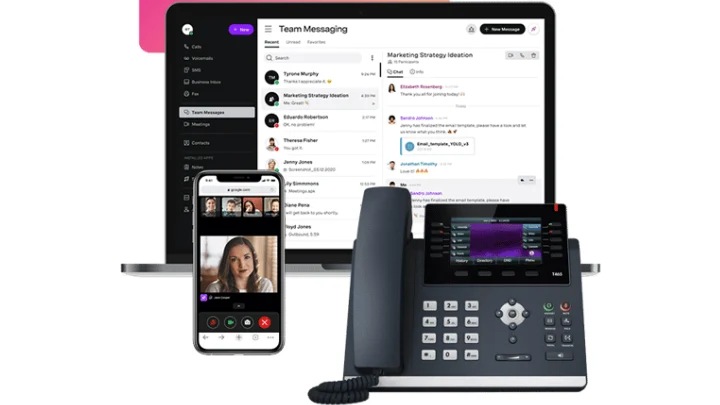
- Unlimited Domestic Calling & SMS: Reliable baseline connectivity on all standard plans.
- Communications APIs: World-class developer tools to embed voice or SMS directly into your proprietary software.
- Vonage Meetings: Basic video conferencing capabilities (up to 200 participants), restricted to Premium and Advanced tiers.
- Visual Voicemail: Standard automated transcription of missed calls delivered to your app.
- App Center Integration: Basic connections to tools like Google Workspace, though advanced CRM syncing often requires paid tier upgrades.
Our top picks for October 2026
RingCentral Features
RingCentral is built to accelerate sales velocity and automate data entry.
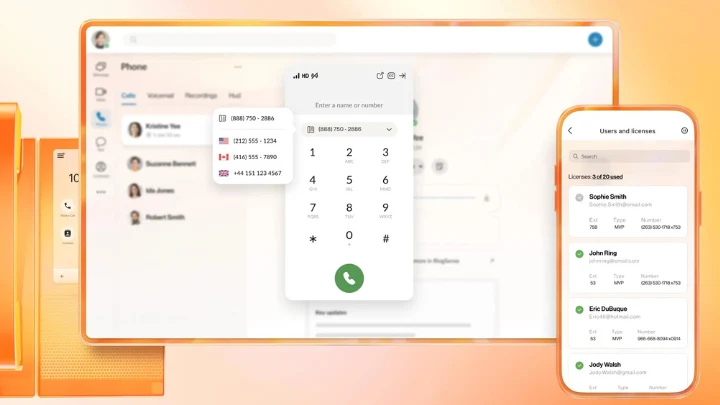
- RingSense Voice AI: Proactively analyzes active sales calls, spots competitor mentions, and generates real-time coaching notes for reps.
- Automated CRM Logging: Deeply syncs with Salesforce, Hubspot, and Zendesk so reps never have to log a call manually.
- Advanced Call Routing: Enterprise-grade IVR, skills-based routing, and "whisper/barge" features that allow managers to quietly coach reps live on a call.
- Unified Team Messaging: A robust built-in chat interface that rivals Slack, fully integrated with SMS and internet faxing.
- Granular Analytics: Real-time dashboards showing queue times, rep performance, and call drop-off rates right out of the box.
Our top picks for October 2026
Zoom Phone Features
Zoom Phone turns your meeting software into a complete digital switchboard.
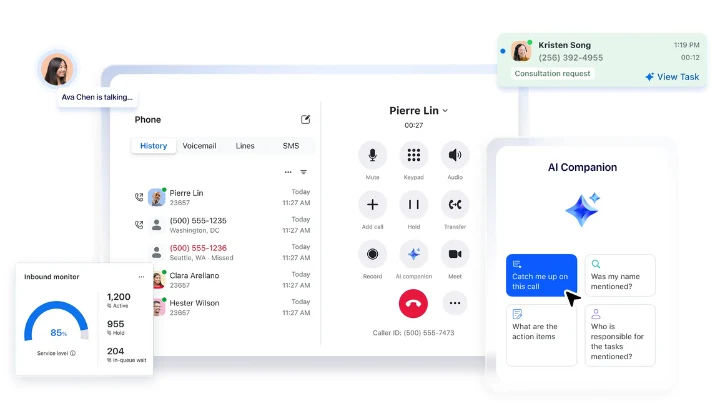
- Zoom AI Companion: Free intelligent assistant that summarizes your phone calls, drafts SMS responses, and organizes action items.
- Call-to-Meeting Elevation: Seamlessly upgrade a 1-on-1 voice call to a full-screen video meeting with a single click.
- Global Select Routing: Allows businesses to easily select local calling zones from 48 supported countries without dealing with regional carrier headaches.
- Nomadic E911: Advanced location tracking that ensures remote and hybrid workers are accurately located for emergency services.
- Workplace Pro Bundling: Natively sits within the standard Zoom app, eliminating the need for employees to download or learn a separate phone app.
Our top picks for October 2026
Feature Summary
For remote sales and support teams, RingCentral easily wins on features. Its native call routing, live-coaching tools, and CRM integrations are built for heavy workflows. Zoom Phone takes a strong second place due to its seamless video integration and free AI Companion. Vonage loses this round because critical business features like call queues and company-wide recording are stripped out and sold as expensive line items.
UX, Integrations & Support
Comfortof Use
Zoom Phone is the easiest platform to use. Because your team already knows how to use Zoom for video, clicking the "Phone" tab requires zero onboarding. RingCentral is highly intuitive but features a denser admin portal because it offers so much routing power. Vonage has an older, slightly clunky interface, and setting up advanced call flows can be frustrating for non-technical admins.
Integrations & Support
RingCentral is the industry standard for integrations. Its App Gallery connects to over 350 platforms, and the Salesforce integration is flawless. Zoom Phone integrates perfectly with Google Workspace and Microsoft Teams. Vonage has a strong API for custom builds, but its out-of-the-box integrations pale in comparison. Furthermore, user reviews flag Vonage's tiered customer support as slow to consistently resolve billing disputes, whereas RingCentral offers robust 24/7 global support on standard plans.
Frequently Asked Questions (FAQ)
Q: Is Zoom Phone cheaper than RingCentral for a small team?
A: Yes, Zoom Phone is significantly cheaper. You can start with a metered plan for $10.50/month or an unlimited regional plan for $16.00/month, compared to RingCentral's base $20.00/month tier.
Q: What are the hidden fees with Vonage Mobile?
A: Vonage advertises $13.99/month, but your final bill will include mandatory regulatory fees (like RCIP at ~$3.50/user), and you must pay high premiums if you want a call queue ($14.99/mo) or call recording ($49.99/mo).
Q: Does RingCentral integrate with Salesforce automatically?
A: Yes, on the Advanced tier and above, RingCentral offers a native, bi-directional Salesforce integration that logs calls, texts, and AI notes without manual data entry.
Q: Do I need the Zoom Power Pack?
A: If you are running a customer support desk and need real-time wallboards, advanced call queue analytics, and desktop receptionist consoles, you must add the Power Pack for $25.00/user/month.
Q: Which VoIP system has the best AI for sales teams in 2026?
A: RingCentral is the best for sales. Its RingSense AI listens to calls in real-time, extracts intent, and provides active coaching prompts to reps, whereas Zoom's AI is more focused on post-meeting summaries.
Final Verdict: Vonage vs. RingCentral vs. Zoom Phone
The battle of Out-of-the-Box AI Power vs. Hidden Feature Paywalls reveals a clear divide. If you are building a remote team that relies heavily on outbound calling, CRM data, and customer experience, you must invest in a platform that includes these tools natively rather than nickel-and-diming you for add-ons.
- Choose RingCentral If:
- You manage a sales or support team that requires deep Salesforce or Hubspot integrations.
- You want live AI call coaching (RingSense) to help train new remote reps.
- You need multi-level IVR, advanced routing, and predictable pricing without hidden queue fees.
- Choose Zoom Phone If:
- Your remote team's culture is video-first and you want to keep all communication in one app.
- You want free, built-in AI meeting and call summaries.
- You are a startup looking for flexible, low-cost metered routing to keep initial overhead low.
- Choose Vonage If:
- You are a highly localized business that only needs a basic dial tone and unlimited SMS.
- You have an in-house engineering team that wants to build custom communication apps using their APIs.
Want to explore further?
Liked this article?
Daniel Zvi
 Related Articles



Smart Recommendations


Thank you!